

FibroScan Results Before and After GLP-1 Treatment: What Patients Should Know
The GLP-1 medications are not really famous; however, the impact of GLP-1 medications is visible today. From celebrities to common people, many are experiencing evident weight loss. The GLP-1 medications work well and slow down how quickly the stomach empties. This helps you feel full for longer and reduces appetite. GLP-1 treatments are really decent for weight management medications. They work even better when you eat good food, exercise regularly, and listen to your doctor.
Simultaneously, your liver plays a key role in your overall strength. It works silently in day-to-day life, removing toxins, supporting digestion, regulating hormones, and storing energy. However, conditions like fatty liver (fat buildup) and liver fibrosis (scarring) can develop slowly without clear symptoms.
This is where the FibroScan test becomes important. It is a non-invasive, painless, and quick method to measure liver stiffness (fibrosis) and fat accumulation (steatosis) without surgery or biopsy. A Non-invasive liver health test like FibroScan helps assess liver condition quickly without pain, surgery, or downtime.
At ScanX, we offer advanced, accurate FibroScan testing to detect liver conditions early, helping you take timely steps toward better health. Consistent liver disease monitoring with tools like FibroScan supports better treatment decisions and outcomes.
In this blog, we’ll explain how FibroScan and GLP-1 treatment work, so you can better understand your liver health and feel confident about your care journey.
For a clear breakdown of scan costs, read our latest article, “Understanding the Cost Differences Between Insurance and Self-Pay at ScanX.”
What is a FibroScan?
Fibro Scan, also referred to as transient elastography, is a modern ultrasound-based test used to evaluate:
Liver stiffness (to assess fibrosis or scarring)
Fat aggregation in the liver (fatty liver grading)
Unlike a traditional liver biopsy, Fibro Scan:
Does not need needles
Does not require a hospital stay
Takes 10–15 minutes only
Has no period of recovery
It offers fast and precise results, and it helps doctors know whether the liver damage is mild, temper, or serious.
At ScanX, your FibroScan (Liver Elastography) is carefully reviewed by a board-certified radiologist to ensure accurate diagnosis and quality care.
Why FibroScan Is Essential for Diagnosing Fatty Liver and Fibrosis
The liver diseases that are becoming common include fatty liver (NAFLD), alcoholic liver illness, hepatitis B, hepatitis C, and cirrhosis. Many patients feel perfectly normal until the disease advances. FibroScan liver stiffness results help measure the level of liver fibrosis and indicate overall liver health. Regular liver disease monitoring helps track changes in liver health and detect issues early.
Fibro Scan helps in:
Early screening of liver fibrosis
Monitor chronic liver disease
Assessing fatty liver grade
Preventing nonessential biopsy
Monitoring development after the pattern of life
Early prediction means better outcomes and fewer complications. FibroScan before and after weight loss can show significant improvement in liver fat and stiffness, reflecting better liver health.
How Does a FibroScan Test Work for Liver Health?
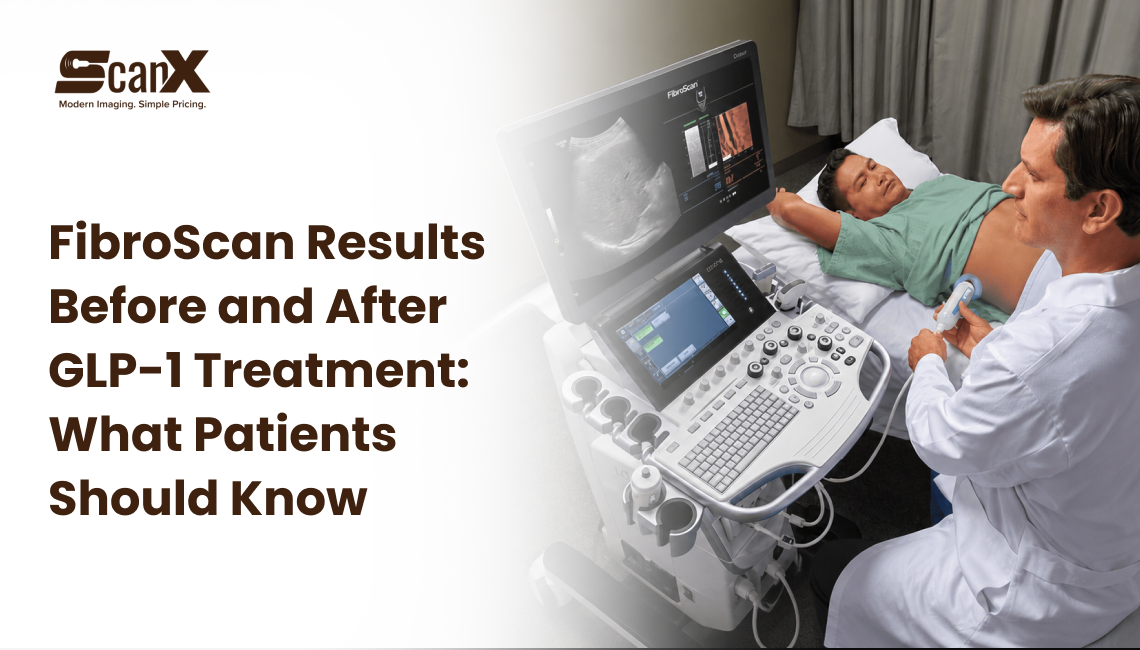
During a FibroScan test procedure, a small probe is gently positioned on the skin over the liver area. It transmits painless vibrations into the liver and measures how fast these waves are transmitted.
Faster waves mean the liver is stiffer, which may signify more fibrosis (scarring).
Slower waves mean the liver is softer, which normally signifies healthier tissue.
The machine then offers a numerical score that helps doctors assess the level of liver fibrosis and fat buildup (fatty liver).
The foundation of managing non-alcoholic fatty liver disease (NAFLD treatment) is steady weight loss and improved metabolic health. For patients tracking FibroScan results before and after GLP-1 treatment, doctors often recommend losing 3–10% of body weight through a calorie-controlled, Mediterranean-style diet along with at least 150 minutes of moderate exercise each week to support better liver outcomes.
Explore our latest article, “What Is a FibroScan? Non-Invasive Liver Health Test,” for quick insights into the procedure and key details.
How to Prepare for a FibroScan Test
Getting ready for a FibroScan test is easy and stress-free:
Avoid eating for 2–3 hours before the test for accurate results
Wear loose and comfortable clothing
Inform the health professionals if you are pregnant or have any health conditions
Continue everyday drugs unless the doctor advises otherwise
The FibroScan procedure is quick, painless, and one can return to the normal routine instantly after the test.
Understanding Liver Stiffness Measurement Scores in FibroScan Results
FibroScan results are based on two main measures:
Liver stiffness (kPa): This signifies the level of liver fibrosis (scarring)
CAP score (Controlled Attenuation Parameter): This measures the proportion of fat in the liver (fatty liver)
Elevated values in these scores might suggest modern fibrosis or increased fat buildup. However, the results should always be explained by a competent medical professional for an accurate diagnosis.
At ScanX, we provide clear, comprehensive, and prompt FibroScan reports to help you take the next steps in your healthcare journey.
You can also explore our guide on “Transvaginal Ultrasound Near Me: What to Expect, Cost & Benefits" to understand more about diagnostic imaging options and their advantages.
How Early Detection Through Liver Screening Supports Better Health
Liver health is extremely important. If overlooked, liver problems can induce serious illnesses, for instance, cirrhosis, liver failure, or even liver cancer. That’s why early liver screening plays a key role.
Benefits of early liver screening include:
Better and earlier treatment planning
Protection against disease progression
Guidance on diet and lifestyle changes
Peace of mind about your health
The positive news is that fatty liver and early-stage fibrosis can commonly be reversed if spotted early, with proper nutrition, regular exercise, and medical assistance.
What Are GLP-1 Medications and How Do They Work for Weight Loss?
In order to acknowledge how GLP-1 medications work, it’s significant to know that GLP-1 (glucagon-like peptide-1) is a natural hormone made in your gut. It helps control blood sugar, digestion, and appetite. GLP-1 medications are prepared to mimic this hormone and enhance its effects in the body. FibroScan improvement after weight loss is commonly seen as liver fat reduction and better liver stiffness measurement scores, signifying healthier liver function.
Here’s how GLP-1 medications work:
Improve blood sugar control: They help the pancreas discharge more insulin when blood sugar is high and minimize glucagon, which helps keep blood sugar levels steady.
Slow digestion: They postpone how promptly food leaves the stomach, restraining unexpected spikes in blood sugar and helping you feel full for longer.
Reduce appetite: They transmit messages to the brain that decrease hunger and increase fullness, which can lead to eating less and gradual weight loss.
Overall, GLP-1 medications work with your body’s biological system to improve blood sugar levels and support weight management. This is why they are widely used for treating Type 2 diabetes and are now also popular for weight loss. GLP-1 and fatty liver disease are strongly linked, as these medications can help in liver fat reduction and improve overall liver health over time.
Who Should Consider GLP-1 Medications for Better Health?
GLP-1 medications were originally developed to address type 2 diabetes, but today they are also intended for weight loss and obesity-related health conditions. They are not miracle drugs; you’ll get the optimal results when you blend them with a healthy diet and usual physical exercise.
If you’re thinking about using a GLP-1 medication, a doctor will investigate your medical records, fitness target, and possible side effects to see if it’s the right and safe option for you.
GLP-1 treatment and liver health
The GLP-1 treatment is getting very popular because of its positive effects onact on the liver for people with obesity treatment or type 2 diabetes. These medicines help people in their weight loss journey. It makes the body better at insulin, improves insulin sensitivity, and lowers inflammation. Also reduces inflammation, which is a big problem for people with liver disease, such as fatty liver disease. Early detection and lifestyle changes can assist in reversing non-alcoholic fatty liver disease and enhance overall liver health.
Studies suggest GLP-1 therapies may reduce liver fat and support better liver function over time. GLP-1 treatment is not a cure for liver problems. It can be very helpful when people also make healthy lifestyle changes like eating nutritious food and exercising regularly. This can really improve the health of the body and the liver. GLP-1 treatment and healthy habits can work together to make a difference for people with liver problems. GLP-1 medications for liver health may help reduce liver fat and improve overall liver function when combined with healthy lifestyle changes.
Does GLP-1 improve FibroScan results?
GLP-1 medications may improve FibroScan results better for people with fatty liver disease. These medications work by helping with weight loss, reducing fat in the liver, and making the body more responsive to insulin. These treatments can lead to stiffness in the liver and improved CAP scores over time. Some studies show that using GLP-1 medications regularly, along with making lifestyle changes, can slowly start to fix early-stage liver damage.
Everyone's results are different, so it's essential to keep track of progress with regular FibroScan checks. GLP-1 medications and FibroScan results need to be monitored to see how well they are working.
How much can FibroScan improve after GLP-1 therapy?
FibroScan improvement after GLP-1 therapy can be noticeable, especially in people with fatty liver disease. Research suggests that with consistent treatment and weight loss, liver fat (CAP score) may reduce significantly, while liver stiffness can also decrease over time. Some patients see measurable changes within 3–6 months, with greater improvement over a year. However, results vary depending on weight loss, lifestyle changes, and baseline liver condition, so regular monitoring is important for accurate progress tracking.
Can GLP-1 medications reverse fatty liver?
Yes, GLP-1 medications show great potential in reversing fatty liver. By contributing to substantial weight loss and improving metabolic health, these drugs can directly reduce liver fat and inflammation. In certain cases, they have even been shown to halt or reverse liver scarring.
How long does it take for FibroScan results to improve?
FibroScan results can start improving within the span of 3 to 6 months with stable weight loss, a balanced, healthy diet, exercise, or proper treatment. Quick changes like reduced inflammation may appear within weeks, while noticeable drops in liver fat and stiffness take a few months. However, reversing advanced fibrosis or cirrhosis can take years. The speed of improvement depends on the underlying condition, severity of liver damage, and how consistently lifestyle changes and treatments are followed.
What is Metabolically-dysfunction-associated steatotic liver disease (MASLD)
Metabolically dysregulated steatotic liver disease (MASLD), earlier known as NAFLD, is a chronic condition where fat accumulates in the liver along with metabolic risk factors like obesity, type 2 diabetes, or high blood pressure. It can evolve from simple fat accumulation to inflammation (MASH), fibrosis, and even cirrhosis if untreated. MASLD is also associated with serious health risks such as heart disease, kidney problems, and worsening diabetes, making early diagnosis and proper management essential.
Check out our guide, “Carotid Ultrasound vs CT Scan: Which is Better for Stroke Detection?” to find out which test is more reliable for early stroke risk detection.
Get Reliable Liver Results with the FibroScan Test at ScanX
At ScanX, we provide advanced FibroScan tests for fast, accurate liver health assessment with a strong focus on patient comfort and care.
ScanX offers affordable ultrasound imaging in Dallas and Fairview with transparent pricing and patient-first care, making fast and convenient access easy through ScanX Patient Referrals.
Explore affordable imaging services at ScanX, including liver, kidney, gallbladder, and abdominal ultrasounds, along with hernia scans, carotid ultrasound, and AAA screening.
Conclusion
Liver may not show obvious symptoms, but its health is essential for overall well-being. A simple test like FibroScan can help find problems and see how things get better, especially when you use it with other treatments like GLP-1 therapy. FibroScan is a way to check on your health without having to do anything too serious. Using FibroScan with treatments, like GLP-1 therapy, can really help you see how your body is responding to the treatment.
While GLP-1 medications are transforming weight loss, their benefits may also extend to improving liver health, cholesterol levels, and reducing long-term disease risks. If you have risk factors or concerns, early screening and the right treatment approach can make a meaningful difference in protecting your liver and overall health.
ScanX, located in Dallas, proudly serves patients from Arlington and nearby areas, including Rockwall, Rowlett, Irving, Flower Mound, McKinney, Frisco, Garland, Plano, Allen, and surrounding communities.
Schedule your FibroScan liver test today and take the first step toward healthier living.
FAQs
1. Can GLP-1 medications improve FibroScan scores?
Yes, GLP-1 medications such as semaglutide and liraglutide can improve FibroScan scores, primarily by lowering liver fat and fibrosis. On a FibroScan, this development is observed as a drop in CAP scores (which measure liver fat) and a reduction in liver stiffness (kPa), signifying better fibrosis levels. These benefits derive from the medication’s ability to support weight loss, enhance insulin resistance, and lower inflammation, all of which help alleviate stress on the liver. While not precisely FDA-endorsed for fatty liver disease, GLP-1s are often preferred for patients with obesity or type 2 diabetes due to their positive impact on liver health.
2. How long before FibroScan results improve with GLP-1?
Improvement in FibroScan results with GLP-1 therapy normally initiates becoming noticeable within 3 to 6 months, while more meaningful and long-term changes might take 1 to 2 years. In the short term (1–3 months), initial signs such as reduced liver enzymes (ALT/AST) and a drop in CAP score (liver fat) can be seen, and in some cases, liver stiffness may begin improving within 12 weeks. By the 6-month mark, many patients experience clear reductions in liver fat and measurable improvement in fibrosis levels. For long-term results (1–2 years), consistent treatment and sustained weight loss are key to reversing more advanced liver scarring. Overall, the speed of improvement depends on how well your body responds in terms of weight loss and metabolic health.
3. What FibroScan score indicates liver improvement?
A FibroScan shows liver improvement when both your liver stiffness (kPa) and CAP score (dB/m) start decreasing over time.
Liver Stiffness (kPa – Fibrosis): This reflects scarring in the liver. Normal values typically range between 2 and 7 kPa. If your score drops below 7.0 kPa or consistently moves toward the 2–6 kPa range, it signifies reduced fibrosis and an improving liver condition.
CAP Score (dB/m – Liver Fat): This measures fat accumulation in the liver. A score below 238 dB/m (around <11% fat) is considered healthy. A downward trend toward this level suggests that fatty liver is resolving.
In basic terms, steady reductions in both scores are strong indicators that your liver health is improving.
4. Can weight loss reverse fatty liver disease?
Yes, fatty liver disease is highly reversible with weight loss, as long as it has not progressed to advanced cirrhosis (permanent liver scarring). Weight loss works by reducing excess fat in the liver, improving insulin sensitivity, and lowering inflammation. Even a small reduction in body weight can make a big difference, losing 3% to 5% helps decrease liver fat, around 7% can reduce inflammation and damage linked to NASH, and losing 10% or more offers a strong chance of clearing liver fat completely and even reversing early to moderate fibrosis. In simple terms, the more consistent and sustained the weight loss, the greater the improvement in liver health.
5. How often should FibroScan be repeated during GLP-1 therapy?
During GLP-1 therapy, a FibroScan is usually repeated every 6 to 12 months to determine how well your liver is dealing with treatment. The accurate frequency relies on your baseline liver condition and your doctor’s advice. For patients with advanced fibrosis or cirrhosis (F3–F4), scans are usually suggested every 6 months to monitor progress closely. Those with moderate fibrosis (F1–F2) may require testing every 6 to 12 months, while individuals with low risk or no fibrosis (F0) can typically repeat FibroScan every 1 to 2 years to check for any changes. Regular monitoring helps ensure timely adjustments to your treatment and better long-term liver health.
6. What should patients expect after starting GLP-1 treatment?
After starting GLP-1 treatment, such as semaglutide or tirzepatide, patients can typically expect a noticeable reduction in appetite and fewer food cravings, often described as less “food noise.” In the initial weeks, it’s common to experience mild and temporary gastrointestinal side effects like nausea or bloating as the body adjusts to the medication. As treatment continues, these effects usually settle, and steady, consistent weight loss begins to build over the first three months, contributing to overall metabolic and liver health improvements.