

Gallbladder Ultrasound: Preparation, Cost & What the Scan Shows
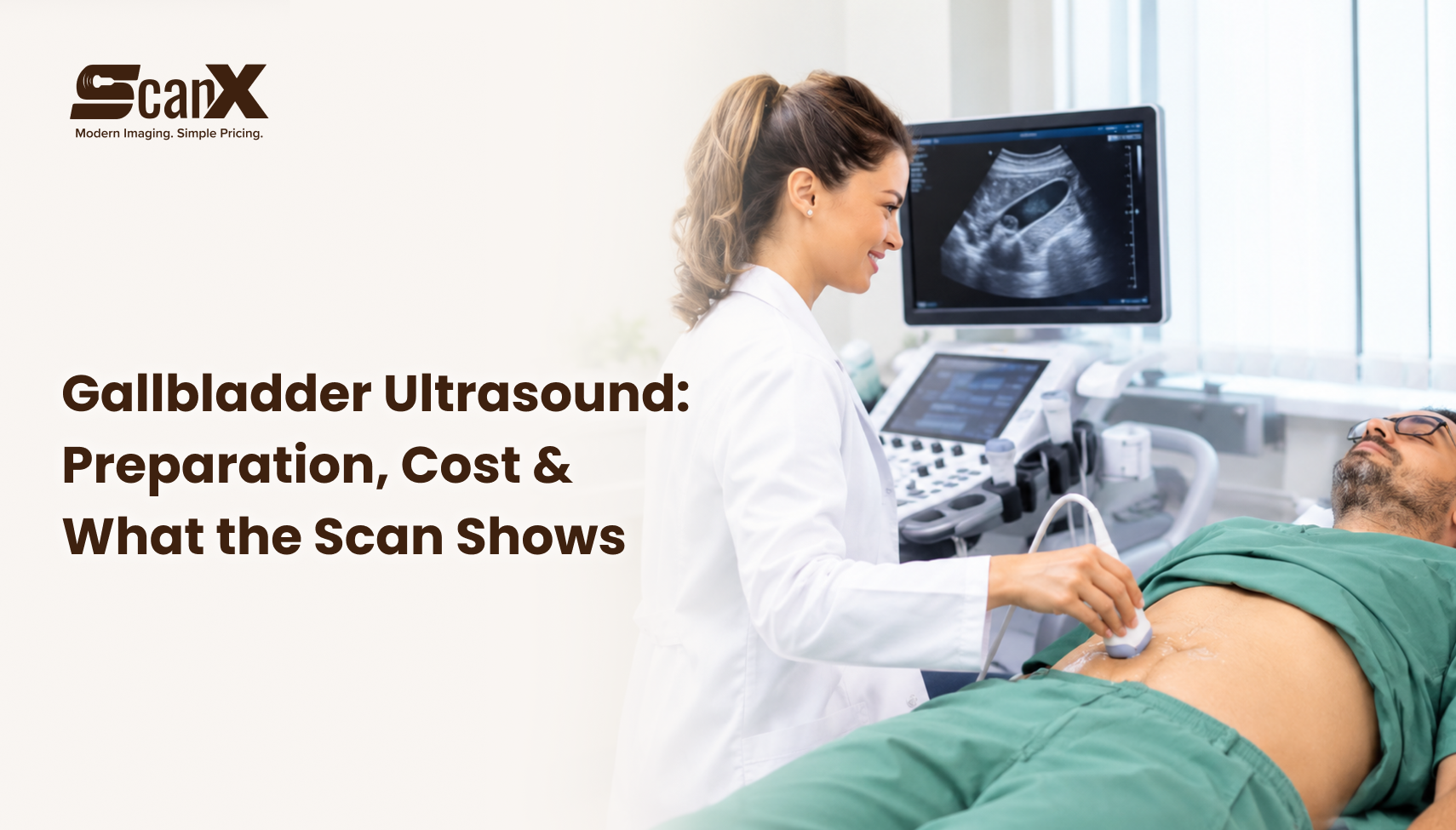
Your gallbladder is a small organ under the liver. It supplies bile, a fluid that helps your body break down fats and absorb nutrients from food. When stones or infections form in the gallbladder, they can cause upper belly pain and trouble digesting certain foods.
A gallbladder ultrasound is a simple, painless scan that helps doctors see what is going on inside. In this article, you’ll learn why a gallbladder ultrasound is done, how to follow the right gallbladder ultrasound preparation, and how to access and understand your results.
Searching for a gallbladder ultrasound cost near me? ScanX offers clear, upfront information on pricing, so you know what to expect before you book.
What Is a Gallbladder Ultrasound?
A gallbladder ultrasound is a safe, painless scan in which the gallbladder images are generated using sound waves. It helps your doctor determine whether your symptoms come from the gallbladder or from another problem, such as liver, digestive, or kidney disease. It is usually done as part of an abdominal ultrasound scan, so following your gallbladder ultrasound preparation instructions is important for clear images.
The ultrasound technician can answer your questions about the procedure, but they cannot discuss your results. A radiologist reviews your images first, then sends the report to the doctor who referred you. The gallbladder ultrasound procedure is quick, painless, and usually takes about 30 minutes.
Results usually take about a week. With ScanX, you can view your gallbladder ultrasound images and report online, often as soon as the radiologist releases them.
For a quick overview of another common scan, read our latest article, “Thyroid Ultrasound Test: Why It's Done, Cost & Normal Results Guide.”
Why Is a Gallbladder Ultrasound Done?
A doctor may suggest a gallbladder ultrasound if the patient has pain that spreads across their upper belly, along with nausea, fever, or yellowing of the skin (jaundice). The scan helps your healthcare team confirm or rule out several gallbladder problems, including:
Gallstones (cholelithiasis): Around 15% of people have gallstones, which are small, hard lumps that form in the gallbladder and sometimes in the bile ducts. Many cause no symptoms, but some can become inflamed and lead to pain or infection. A gallbladder and bile duct ultrasound checks for gallstones, blockages, and inflammation in the organs that store and carry bile.
Acute cholecystitis: This is swelling or infection of the gallbladder. It is often linked to gallstones but can happen without them. In serious cases, the gallbladder can fill with pus (empyema).
Gallbladder cancer: This is rare, with fewer cases expected each year. It is usually found late, which is why early imaging matters.
Porcelain gallbladder: The gallbladder wall becomes hard. It may be linked to gallstones, but the connection is not certain.
Gallbladder polyps: These are small growths on the inner lining. They may grow on the surface or on a stalk, and most are harmless.
Gallbladder rupture: Gallstones, inflammation, or injury can sometimes cause the gallbladder wall to tear or leak, causing sudden, sharp pain.
At ScanX, a board-certified radiologist reviews your gallbladder ultrasound results to help ensure precise findings and dependable care.
How to Prepare for a Gallbladder Ultrasound
Before your gallbladder scan, you will likely be asked to avoid fatty foods the day before your appointment. Following these instructions helps ensure clear images and more accurate gallbladder ultrasound results.
As with all imaging tests, read your requisition carefully for any special instructions, such as fasting times or medication guidance. If anything is unclear, don’t hesitate to contact the imaging center. Confirming the details in advance helps your gallbladder scan go smoothly and gives your doctor the best possible information to interpret your results. Gallbladder ultrasound fasting helps your doctor see your gallbladder clearly, so always check your requisition for the exact timing.
For a quick look at the procedure and key details, read our latest article, “Understanding IVF Monitoring Ultrasounds: A Patient's Guide.”
Gallbladder Scan Prep Tips
Gallbladder Scan Dos and Don’ts
Follow these basic tips to prepare for your gallbladder scan and help get clear, precise gallbladder ultrasound results.
Do
Read the requisition. Check it for any special instructions about eating, drinking, or fasting.
Explain to your doctor about your medications. Let your doctor and the imaging clinic know what you take when you book your scan. You may be asked to skip some before your appointment.
Wear comfortable clothes. Choose loose items that are easy to remove, as you may need to change into a hospital gown.
Remove all jewellery. Take it off before your scan.
Don’t
Eat for 6 to 12 hours before your scan. This gives your gallbladder and digestive system time to empty, which leads to clearer images.
Drink during the fasting period. You may be allowed a small amount of water. Your requisition will have the exact details.
What to Expect During Your Gallbladder Scan
Before the gallbladder ultrasound, your doctor may instruct you to empty your bladder. Then you will be ready and lie on the exam table.
A technician, designated as a sonographer, will spread a warm gel on the skin. They will then glide a small handheld device, called a transducer, over the area.
High-frequency sound waves are sent using the transducer to your organs and tissues and bounce back. These echoes are turned into live images on a screen, which your doctor will use to review your gallbladder ultrasound results.
A gallbladder scan is safe and non-invasive. You may feel slight pressure from the transducer, but it should not be painful. The whole test usually takes about 30 minutes.
What Happens After a Gallbladder Ultrasound?
Once your ultrasound of gallbladder is done, you can get dressed and carry on with your day as usual. There is no recovery time.
The sonographer cannot share your gallbladder ultrasound results with you. The images are then shared with the radiologist, who will examine them and prepare a report for your doctor.
How Long Do Gallbladder Ultrasound Results Take?
After your gallbladder scan, the radiologist will send your images and report to your referring doctor. Your doctor will go over your gallbladder ultrasound results with you at a follow-up appointment. This usually takes about a week, though the timing can vary.
With ScanX, you can get early access to your images and report, often as soon as the radiologist releases them. Being prepared for your appointment helps you have a more focused conversation with your doctor.
Questions to ask your doctor
Did my gallbladder scan show anything abnormal?
Can we ease my symptoms?
How do we treat the underlying cause?
What are the next steps?
ScanX gives you personalized questions to ask your doctor. It also highlights any recommendations in your report, so you always know what comes next.
How Much Does a Gallbladder Ultrasound Cost?
The gallbladder ultrasound, also called a gallbladder scan, varies depending on several factors, including your insurance status, the facility, and your location. A gallbladder scan is usually done as an abdominal ultrasound, which is generally affordable compared to other imaging tests, and it does not use radiation. If you have insurance, the scan is typically covered when it is medically necessary, but you may still pay a share through your deductible, copay, or coinsurance. Choosing an in-network facility can lower your costs, and some plans may require prior authorization. Without insurance, you are responsible for the full cost, though outpatient imaging centers usually charge less than hospitals, and many offer discounted self-pay rates or payment plans. Prices can also differ based on how the provider bills, since some bundle the technician, facility, and radiologist fees while others charge them separately. To save money, ask about cash-pay discounts, compare prices at local imaging centres, and use your HSA or FSA funds if you qualify.
To learn more about pricing and insurance, read our article, "Understanding the Cost Differences Between Insurance and Self-Pay at ScanX."
Conclusion
A gallbladder scan is one of the safest and most effective ways to find the cause of abdominal pain. It uses ultrasound to check your gallbladder and nearby organs without radiation. An abdominal ultrasound gallbladder scan checks your gallbladder and nearby organs for problems like gallstones and inflammation. A gallbladder inflammation ultrasound can show a thickened gallbladder wall, fluid around the organ, and gallstones, which are common signs of cholecystitis.
Never ignore symptoms such as:
Pain or cramps in the upper abdomen
Nausea or vomiting
Bloating
Fever
Yellowing of the skin or eyes (jaundice)
Discomfort after eating a fatty meal
Knowing how the scan works, preparing properly, and reviewing your gallbladder ultrasound results with your doctor can lead to early detection and the right treatment.
If you are looking for an ultrasound scan near me, ScanX offers advanced imaging technology, expert radiology knowledge, and accurate diagnostics. Looking for a gallbladder ultrasound near me? ScanX offers advanced imaging technology and accurate diagnostics.
Patients travel to our Dallas location from across the region, including Arlington, Rockwall, Rowlett, Irving, Flower Mound, McKinney, Frisco, Garland, Plano, and Allen. If you live nearby, ScanX is easy to reach for your gallbladder scan.
Gallbladder Ultrasound Near Me: Why Choose ScanX?
If you are searching for a gallbladder ultrasound near me, look for a centre with experienced radiologists, high-quality ultrasound machines, and reliable reporting. Clear images help your doctor make better diagnoses and treatment decisions, so the quality of your gallbladder scan matters.
ScanX offers ultrasound scan services performed by trained professionals and interpreted by expert radiologists. You can expect detailed scan findings, accurate reports, and patient-focused care so that you can feel confident about your gallbladder ultrasound results.
Looking for reliable ultrasound imaging services in Dallas or Fairview? ScanX combines clear pricing with patient-centred care at competitive rates. Through our Patient Referrals page, getting the imaging you need is quick and simple.
Whether you need a liver, kidney, gallbladder, or abdominal ultrasound, ScanX has you covered. You can also book hernia scans, FibroScan liver elastography, carotid ultrasound, or AAA screening.
Schedule your Gallbladder Ultrasound today and take the first step toward better thyroid health.
FAQs
1. What does a gallbladder ultrasound show?
A gallbladder ultrasound shows live, non-invasive images of your gallbladder, bile ducts, and nearby organs. Your doctor uses these images to find problems such as gallstones, inflammation, and blockages. Understanding your gallbladder ultrasound results can help you know what to expect and what comes next.
The most common finding is gallstones. On a gallbladder scan, stones usually appear as bright spots with a dark shadow behind them, and they often move when you change position. The scan can also show gallbladder inflammation, known as cholecystitis, which may appear as a thickened gallbladder wall or fluid around the organ. Another possible finding is bile sludge, a thick, layered fluid inside the gallbladder that can come before gallstones form.
A gallbladder and bile duct ultrasound can also show whether the bile ducts are widened or blocked, sometimes by a trapped stone. In addition, the scan can detect polyps or other small growths on the gallbladder wall. If anything unusual is found, your doctor will explain the results and recommend the right next steps.
2. How to prepare for gallbladder ultrasound?
To prepare for a gallbladder ultrasound, you usually need to fast for 6 to 12 hours before your scan. Fasting allows your gallbladder to fill with bile and reduces gas in your bowel, which helps the sonographer capture clear images. Following your gallbladder ultrasound fasting instructions carefully can lead to more accurate gallbladder ultrasound results.
The exact fasting time depends on your appointment. For a morning scan, you should not eat or drink anything after midnight, or for 8 to 12 hours beforehand. For an afternoon scan, you may be allowed a light, fat-free breakfast early in the day, but you must stop eating and drinking at least 6 hours before your appointment. Small sips of water are usually allowed if you need to take essential medications, but always check your clinic’s instructions. Many doctors also suggest eating a low-fat or fat-free meal the evening before your gallbladder scan.
On the day of your appointment, wear loose, comfortable clothing, since you may need to change into a hospital gown. Bring your doctor’s requisition or referral form, your insurance or health card, and any previous scans. Be sure to tell your doctor and the imaging clinic about any medications you take when you book your scan, as you may be asked to skip some of them beforehand. If you have any questions, contact the imaging center before your appointment.
3. Can you eat before a gallbladder ultrasound?
No, you should not eat before a gallbladder ultrasound. Fasting is an important part of gallbladder ultrasound preparation, and it helps your doctor get clear images and more accurate gallbladder ultrasound results.
There are two main reasons for fasting. First, when you eat, your gallbladder contracts to release bile and becomes small, which makes it hard to see on a gallbladder scan. When you fast, the gallbladder fills with bile, so it is easier to examine. Second, eating adds air and gas to your stomach and bowels, which can block the sound waves and make the images less clear.
Most people need to fast for 6 to 12 hours before the scan, with no food or drinks except small sips of water. Many doctors prefer an overnight fast. It is also a good idea to avoid fatty or greasy foods the day before your appointment. You can usually take your regular medicines with small sips of water, but check with your doctor or imaging clinic first. Always follow the gallbladder ultrasound fasting instructions on your requisition.
4. What Are the Gallbladder Ultrasound Costs by Location?
The cost of a gallbladder ultrasound can vary depending on where you live. Prices often differ from state to state, and they can also change between urban and rural areas or between large cities and smaller towns. Since a gallbladder scan is usually done as an abdominal ultrasound, general abdominal ultrasound pricing shows that costs can differ noticeably from one state to another. To get the best price, compare local imaging centers before you book your gallbladder ultrasound.